Friday, 28 February 2020

The Dark Horse

Earlier this month was the Kala Ghoda Arts Festival: a celebration of music, dance, drama, literature, visual arts and more art forms across different locations in South Mumbai. 


The immediate comparison, in my mind, was to Chennai's Mylapore Festival, and they sure do share a sense of local excitement and spirit. However, the KGAF is more modern in flavour and attracts a slightly different kind of crowd. 


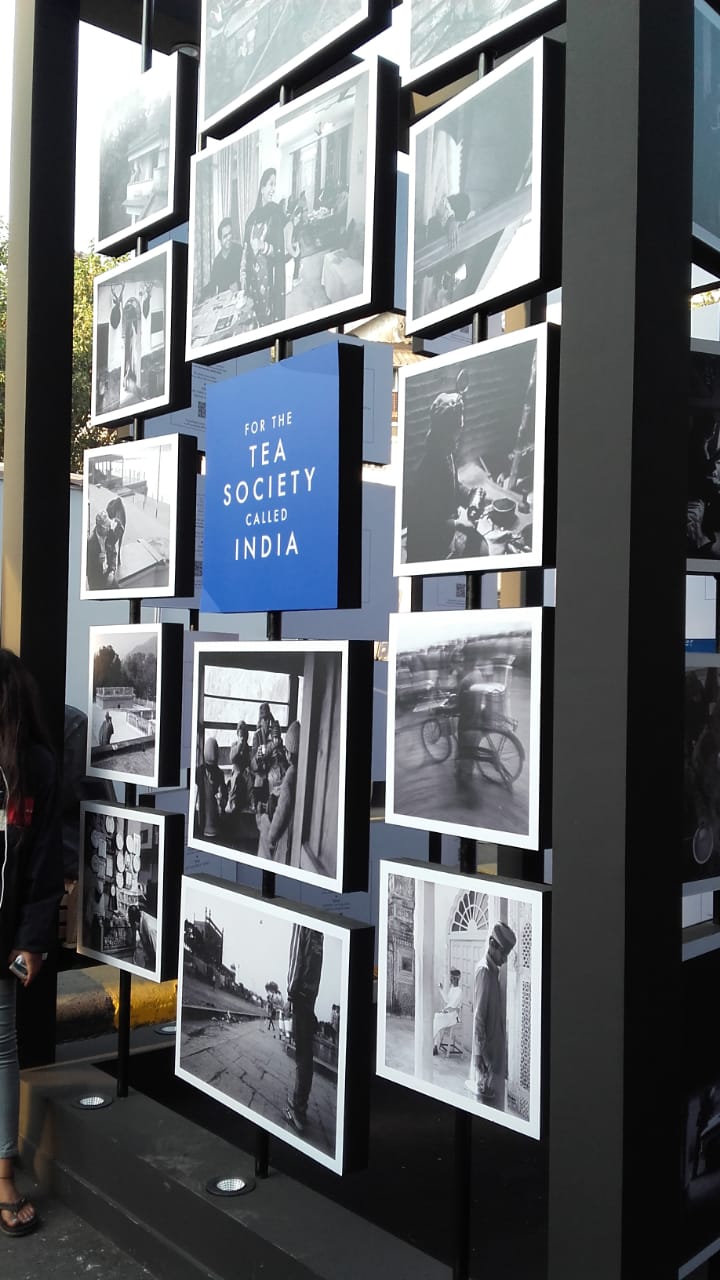
The main draw was the street connecting the Kala Ghoda statue and Lion Gate, which was filled with art installations and stalls of various kinds. The installations ranged from photographs celebrating the city, to representations of classic childhood toys, to representations of houses. Many incorporated ways to interact with it using technology, such as QR codes with facts and special points to take selfies. The stalls sold mostly clothing, jewellery, art and decorative items. Of course there were food stalls as well, and one thing I was glad to see (and use) was seats in a gallery along one side of the street. 


I also managed to catch a few events: one was a high-production-value Hindi adaptation of The Tempest, in Horniman Circle garden. It was an interesting watch! For starters, Prospero and Alonso were women. One suddenly thinks of the play differently when thinking of it as a mother and daughter who had to leave their home and build a life on the island. Ariel was two spirits, with a playful and agile dynamic. Caliban was foreign and frightening, and drew the most applause. Also, Ferdinand was very jacked. 

Of course, the medium made all the difference: the characters feel more relatable speaking in a conversational, local language. Unfortunately they didn't use this to explore possible themes (colonialism, gender) any deeper than the text.

Also, here is an unabashed plug of Mumbai Maths Circle. It is aimed at school/college students and maths teachers who would like to discuss puzzles and interesting mathematical ideas, with no thoughts of exams. Take it from me, even if I'm biased - maths is great fun! 


Friday, 7 February 2020

The Past and the Pudheel

I must clearly be passing well as a local since bus conductors have taken to talking to me in Marathi. Luckily "dahaa" is close enough to "dus", and "pudheel" (next) is familiar since it is in every audio announcement, but I don't think I can handle anything more complex just yet. 

-

Mumbai has many museums - for example, museums for RBI, BEST, CST, Churchgate, Gandhi - but the oldest among them is the Dr Bhau Daji Lad Museum in Byculla. It shares a complex with a zoo, which is definitely a bigger draw! 

One superb thing this museum does is to hold free (no prior registration either) hour-long tours every Saturday and Sunday, in English as well as Hindi and Marathi. They are conducted by trained volunteers. 

Our particular guide was a doctor in training and had admirably committed to using his position to urge his listeners to be observant, historically literate, but most importantly empathetic, in these divided times.

The museum was built in 1862, then known as the Victoria and Albert museum. It was renovated in 2003 by INTACH. (More history here.) The guide pointed out the gentle green used to colour the inside walls, which contrasts well with the bronze and silver exhibits. There are ornate metal decorations everywhere, some painted in near-pure gold paint.


In the centre there is a regal statue of Prince Albert, flanked by the Muses of Science and Art. Accordingly, the exhibits on either side are broadly categorised into practical/technological ones and art/ornamental ones. 


We didn't spend much time on the ground floor; it has more 'typical' museum exhibits: weapons and miscellaneous items from various centuries and parts of India. The guide picked up a couple of things to talk about in depth, rather than a speedy and superficial tour of the whole place, but he went on several tangents along the way! (About gender, communalism and so on. His intentions were undoubtedly good - what is the use of history if not to prevent us making the same mistakes? But I personally would have preferred he instead fill that time with lesser-known facts about the museum or its contents.)

More fascinating for its local flavour was the first floor. It had figurines of the various communities that came to occupy Bombay along various points in its history; also of Indian communities in general. There were maps of Bombay through the ages. It also showcased Indian rural life, from its fields to its professions to its children's traditional games. 


Don't miss his belly.

This is a legitimate profession.

Amma and Appa: Please dress like this sometime.

The museum also has film screenings, exhibitions and talks round the year - will surely catch one of those sometime!

Tuesday, 21 January 2020

It's all happening here!

As the music season in Chennai winds down, here is an account of some of the event venues I have visited so far in Mumbai.

Shanmukhananda Hall: The first thing that strikes you is how high-security the place is. There are posters detailing what to do in case of a bomb blast. Visitors are patted down, unsettlingly intimately, and stripped of their water bottles!
For Chennaiites: the auditorium is roughly comparable to Sir Mutha concert hall in Chetpet, in size. Minimalism was not their intention in decoration - practically every inch of the space right outside the hall is covered in pictures of Carnatic musicians, of musical instruments, biographies and the like. There are multiple likenesses of MS Subbulakshmi, and a golden statue of Saint Tyagaraja which I very much doubt he would approve of. The sound and seating are good though. I had gone for (some of) a day-long Hindustani event with ragas corresponding to the 8 prahars. The stand-outs were Kalapini Komkali, Parveen Sultana and Venkatesh Kumar. I hope this is a springboard to appreciating Hindustani music more!


Chembur Fine Arts: This is a lot closer to the typical Chennai sabha, although the pillars and general decor made me also suspect it might double up as a wedding venue? I had the pleasure of welcoming my veena gurus to Mumbai here.


National Centre for Performing Arts: I only visited the Experimental Theatre, for a fusion concert by Sanyog. It was a small, intimate hall, with the interior and exterior ambience befitting the location and the ticket price! 


Piramal Museum: I was here for a talk by the peerless Chithra Madhavan, about temples as cultural centres. The museum is small but hosts varied pieces of art from different parts of India. 


(The last painting is a Mughal-era painting of Draupadi and her attendants, commissioned by Akbar's minister and commander Abd al-Rahim Khan)

Ruparel College: This is one of the regular venues for TIFR's outreach programme, Chai and Why. The talk I had attended drew a varied audience of curious children, their parents and some young adults. It's a friendly atmosphere, with regular interruptions for questions, and of course a chai break. More institutes should do such a thing! 

I do have a wish-list (spoiler alert: it includes Wankhede stadium), so do watch this space.


Tuesday, 8 October 2019

Holding up a Mirror

In all the very many cities I've lived or stayed in as an adult, (joking, you can count them on one hand), I have found that a quick and easy way to get a sense of the city is to read the local papers. There are day-to-day happenings, and there are things that set the paper apart that will be surprising to everyone else. (Still better would be to read in vernacular languages, but that will have to wait.)
My local paper of choice here has been Mumbai Mirror, and has it been an eventful couple of months for the city! The south-west monsoon has been the heaviest in several years. Assembly elections are coming up. But the issue gripping the city has been the plan to raze thousands of trees in Aarey forest to make space for a Metro car shed. Local residents have turned out in the middle of the night and clashed with police - and scored, as of now, a temporary but partial victory as many trees have already been cut but the Supreme Court has stepped in.
Newspapers seem like one-way communication, but they really need not be, in the Internet age. Mirror has features where readers send in interesting photos of the city, apart from publishing a (usually currently relevant) question every day to start a conversation on social media. This is apart from traditional letters to the editor, of course. Local papers also have more freedom to go deeper into localised issues (for instance, features on how the freezing of PMC bank has hit the Sikh community in the city).
Another thing that struck me in the event listings is the popularity of theatre - in Marathi, Hindi and English. I am yet to attend any plays but this makes me very curious. Stand-up comedy also seems to be a big draw. There is also lots of celebrity gossip that I gladly skip over, but I see why people are invested. 
But what I'm really trying to do is approximate this nebulous concept of the "spirit of a city". I don't know how one would define such a thing. I don't think a city is too much more than people who happened to be in the same place at the same time. Some contagious ideas and tendencies stick and are chalked up to the spirit of the city. Would Mumbaikars walk so famously fast, or crowd on trains, or recover after terror attacks, if the city wasn't the financial capital? I don't know. But any new avenue to spread positive ideas and hold powerful people accountable is a good thing. 
Also, here is a Mumbai Mirror feature with vintage photographs and interviews with personalities who shaped the city, do check it out.

Thursday, 12 September 2019

[Locality]-cha Raja's final journey

Transliteration inherently involves some loss where the new script has limitations (see: கோகுல் /kogul!) but an interesting phenomenon is when it takes on the inflections of the new language. Just within a few hundred metres of where I am, you can "navy" being written as नेव्ही (nevhi) and "stores" स्टोअर्स (stoars), even when it is entirely possible to write them without the extra letters. This is indeed how they are said; the transliteration is less to do with reproducing the original word and more to do with putting down the local interpretation of it, in the local script.
-
Today marks Anant Chaturdasi, the tenth day following Vinayaka Chaturthi and the (final) day that Ganesha idols are immersed in water. For historical reasons, this event is a massive, massive event in Mumbai. Huge crowds in long lines gather to get a darshan of the deity, and still bigger crowds usher the lord through the streets on Visarjan day.
The glamour of the whole affair makes one think about how far removed the festival has become from its roots, and even from its reincarnation as a way to unite Indians under the British. What does it say about devotees' faith, if they have to insure their idol for tens of crores of rupees? More troubling to me is the willingness to spend weeks creating the idol, worshipping it for ten days and then drop it into the polluted ocean; inversely, the willingness to release Plaster-of-Paris idols painted in dangerous heavy metals into the ocean, indeed a divinity in its own right. 
To mitigate the environmental damage, the BMC introduced artificial ponds for immersion a few years ago, but the purpose is being defeated as the water is pumped untreated into stormwater drains which eventually reach the sea. 
The PoP idol remnants are crushed into smaller pieces and transported to construction companies. Surely this is a jarring fate for the idol? I wonder if this even crosses the minds of the throngs of devotees. The tradition of immersing a clay idol in a (local, natural, clean) water body holds symbolic significance, and while one aim is to probably discourage people from becoming too attached to the idol and recognising the eternal divinity... this rather warped version of that very much confuses me. 
That said, a show of celebration and devotional abandon is a beautiful thing; different cities have their version of that, and the spirit of this one is like no other.

Sunday, 1 September 2019

Museum Musings

Another interesting study in how different cities evolve different solutions to day-to-day problems: how do different bus conductors let the driver know he can move? Of course the "whistle podu" city involves the conductor blowing a whistle; in Mumbai buses, a length of string with a bell attached runs along the length of the bus, which the conductor can tug from wherever on the bus he is. (The latter seems possibly conducive to misuse but clearly it has not been a problem.)


Looking like a proper tourist, replete with cap and sling bag, I finally made my first visit to the museum since moving. Hopefully the first of several - I spent two-and-a-half hours there and still covered less than half of it.


My South Indian temple/Chithra Madhavan-loving self was obviously drawn to the sculpture gallery first. There is a high representation of sculptures from Maharashtra, Karnataka and Gujarat - after all, the museum was once the Prince of Wales Museum of Western India. Hindu gods and goddesses stand in a gallery adjacent to a separate one for Buddhist and Jain sculpture. There is also a metal sculpture gallery with bronze statues as well as objects.


I found the most unique gallery to be the Himalayan art gallery. A collection of statues, paintings and other objects from the Tibetan and nearby regions, the gallery is curated with care to actually simulate the feel of the place (barring temperature!). 


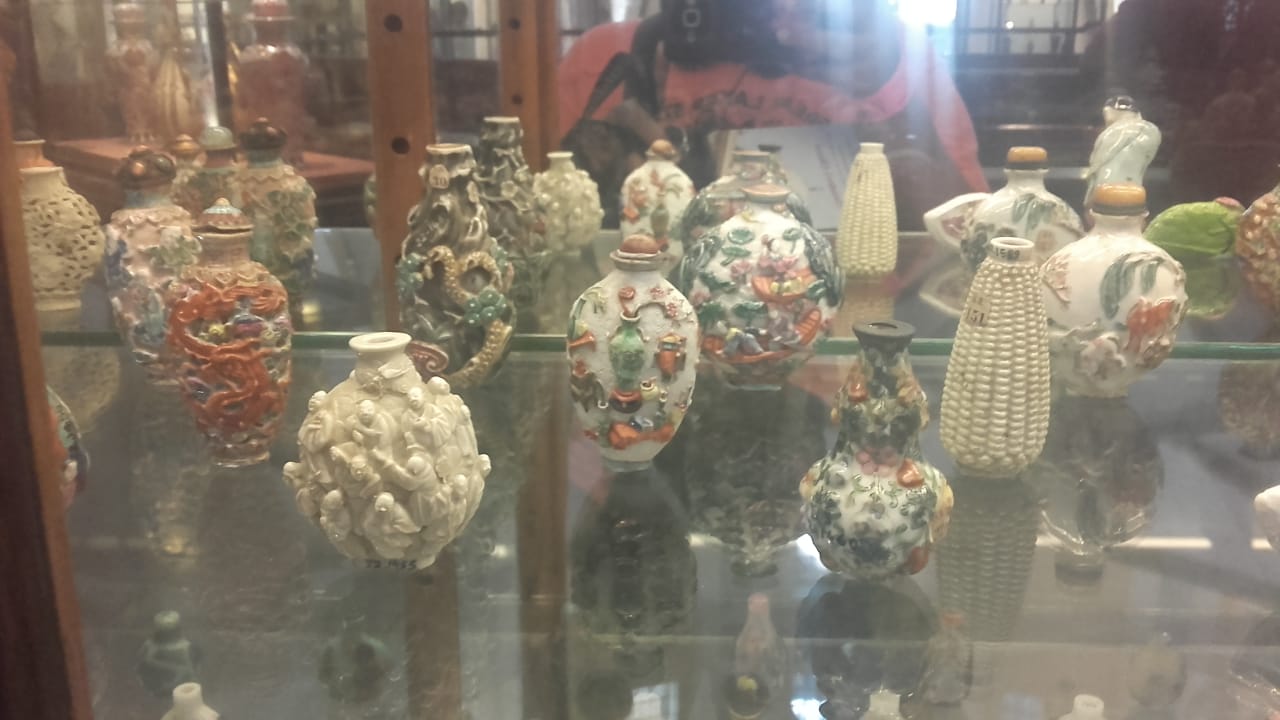
The other standout was the personal collections of Ratan and Dorabji Tata. Spanning European paintings and Oriental snuff-boxes, it was a visual treat but more so a reminder of the scale of their wealth. Was it really a coincidence that a student at Tata Institute spent an afternoon looking at the Tata brothers' belongings? 


I also visited the miniature painting and Krishna galleries. A personal favourite from the latter was a visual representation of the Madhurashtakam in praise of Lord Krishna - after all, I did listen to MS Subbulakshmi's rendition every day for a long time. 


The audio guides were definitely made for foreigners, (I'm talking explicit recommendations for things to see and buy during "your stay in India") so a lot of the information was not new. Some was though, and I do think a lot of Indians could stand to learn about the "lost wax method" and Buddhist history.  

Flora Fountain is a short walk from the museum (well, short if you can determinedly walk past the piles of second-hand books without getting distracted).


Do stay tuned for further museum visit logs! There was an entire block I didn't visit. Until then, a virtual high-five for anyone who can spot my reflection in one of the photos. 

Sunday, 11 August 2019

Walk the Straight Path

"Kanchipuram Dhokla", my incredulous eyes read as the ticker goes by a fourth time. A snack shop proclaims this with confidence. I have not heard of this apparent delicacy in my twelve years of living in a small town near Kanchipuram, called Chennai. The closest thing I can think of is Kanchipuram Idli, whose resemblance to dhokla ends with both having holes. You know how they say people discover themselves when they travel? It seems I will be discovering my home state.


While Chennai celebrates Madras Day, I decided to treat myself to a bit of local history here, by attending a heritage walk in the Esplanade area. Conducted by Khaki Tours and led by a Mr Farrok, the walk wound through some old, broad streets (with relatively recently changed names!). Below are some highlights. 

"Esplanade" refers to an open ground, and the area known as Esplanade was the open ground around the Fort. Eventually, the fort became overcrowded, so the walls were torn down and the open grounds became occupied by various structures. 

Capitol Theatre, earlier Gaiety Theatre, which evolved from a drama stage to a silent movie theatre to a talkies theatre. It is the site of Dadabhai Naoroji's first - and only - stage performance, where he was booed off the stage. Who knows what turns history would have taken had he stayed in the acting business?

Another theatre, Empire Theatre, was built in the Victorian Gothic style but later remodeled to an art-deco style featuring geometric patterns.

Elphinstone Cricket Club, where Indians watched the British play cricket. (Reminds one of Champaner?) Things must have come full circle when we watched them play in Lord's last month with much enthusiasm though it wasn't an India match. Later, we saw the Bombay Gymkhana, where the first India v England Test match took place in 1933. Unlike Champaner, India lost, but the stakes probably weren't as high.

Fort Dispensary (below), built in the 1870s mainly to stock medicines for women and children and still the site of women's organisations. Notable are the triangular roofs with Mangalorean tiles. 


Bombay Gas Company, established in 1862 by the Governor-General. Interestingly, optic fibres now run where gas lines once did. Opposite stands the telephone building (below), where the telephone was brought to Bombay within six years of its invention!


Parsi Lying-In Hospital (below), founded exclusively for delivering babies, with an emphasis on hygiene and isolating the new mother in order to reduce the number of deaths during childbirth. 


Schools - the Young Ladies' School, the J.B. Petit School (below), the Cathedral School and the Alexandra Girls' school. 


The ENT Hospital, where the Bombay City Improvement Trust was founded following the Bombay Plague in the 1890s, for better development and sanitation of the northern areas that were being planned and built. 


The Esplanade Estate (above; this image shows the passage between the main house and the servants' quarters) and the Tata Palace (below). The former is now occupied by a philanthropic organisation, while the latter now houses Deutsche Bank. Both show French influences in the architecture. Esplanade Estate, guarded at the entrance by a sculpture of a St Bernard, was renovated in 2013 in a manner that preserved the spirit of the construction, and hence won a UNESCO award.


The walk concluded opposite the TCS House, earlier known as the Ralli House. The inside was completely overhauled, resulting in a building that appears to have four storeys from the outside but really has six! A board above the entrance states, in Greek, "Walk the Straight Path". This walk took a path with many turns (reconstructed below, as best as I could remember!) but I hope to do it again sometime with more leisure.


And finally here is a shot of VT/CST with clouds looming behind - exemplifies what this city is known for.


Dee-fence!

     Earlier this year, I had the good fortune to visit Toronto for two months for an academic project. In that time, I tried to take in as ...